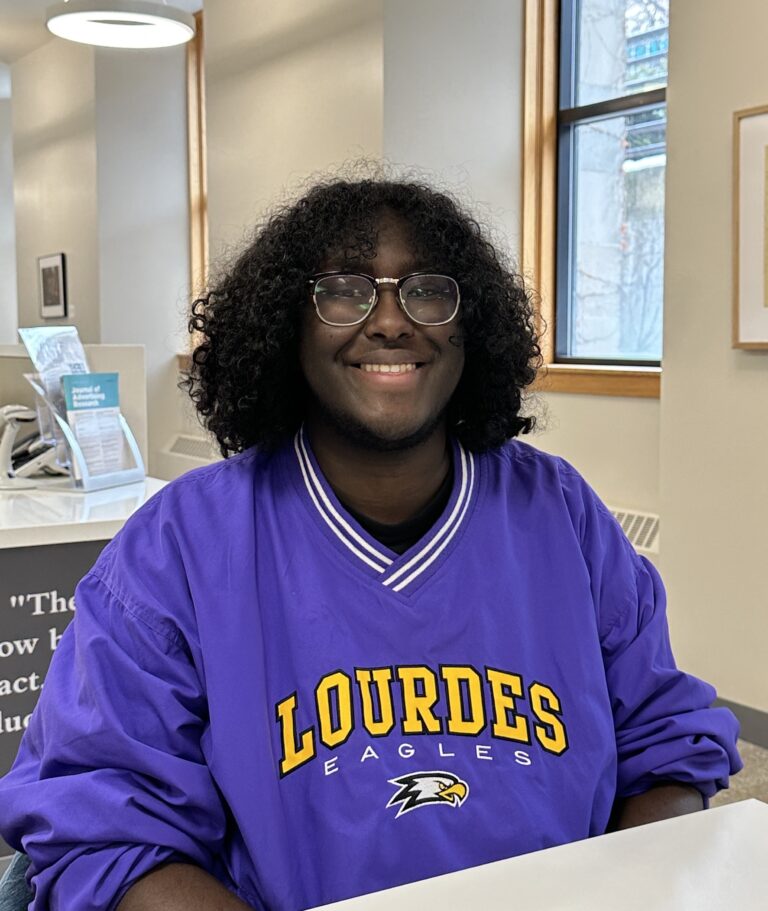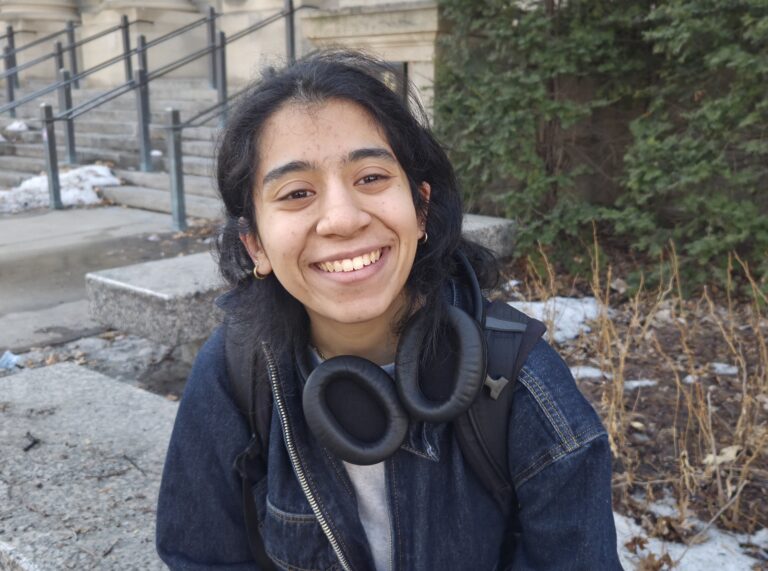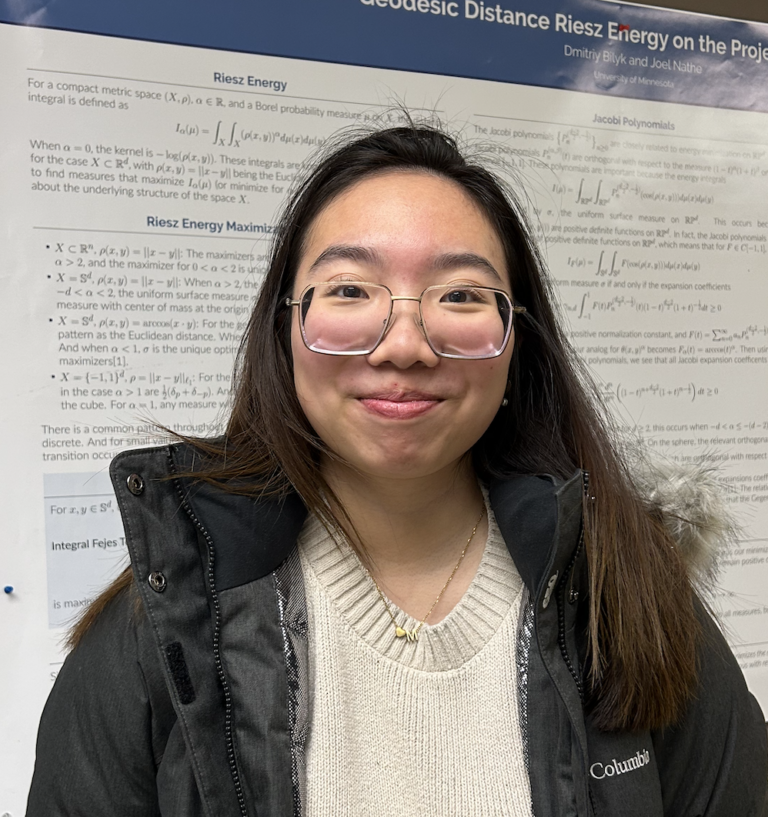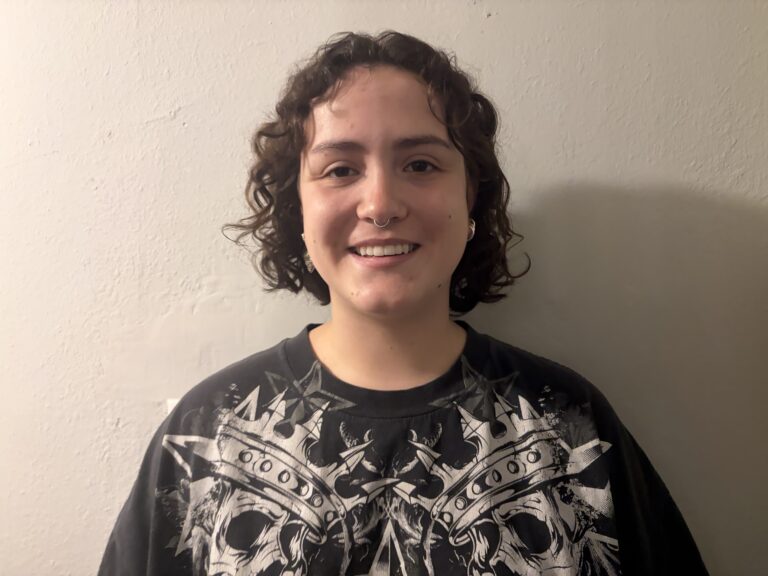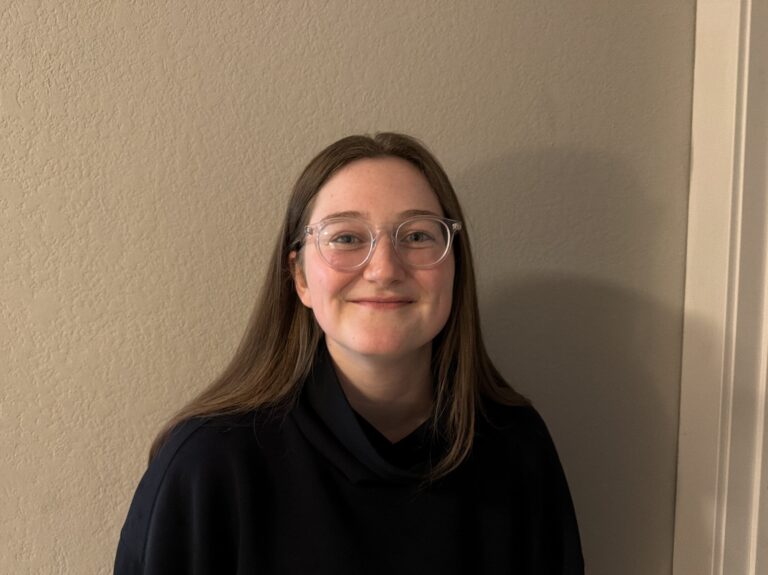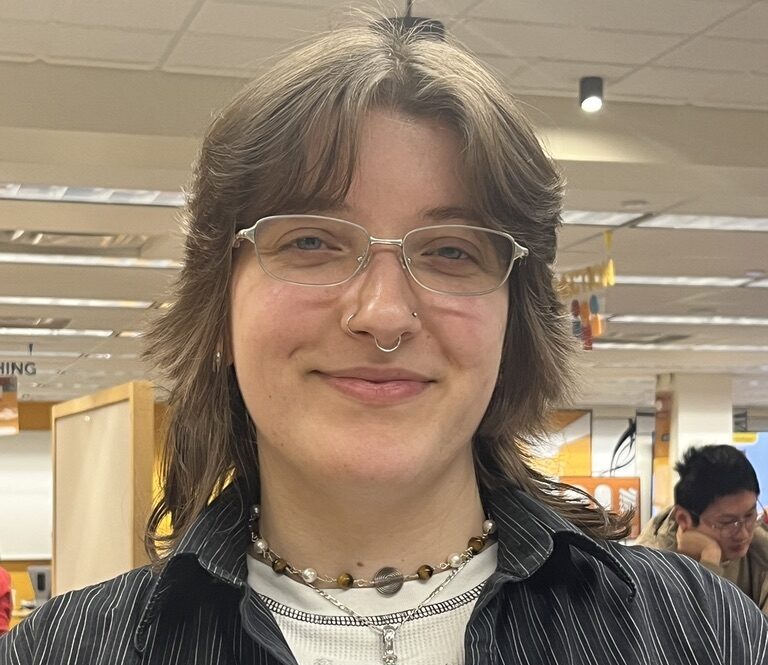
Reese Pearson: ‘We have to show up for each other; we protect each other.’
Reese Pearson, who uses they/them pronouns, is a senior at the University of Minnesota with a major in psychology and a minor in art. They are an advocate for mental health issues and accessibility to art.
“I came to the university because I wanted to stay kind of close to home. My hometown is 20 minutes away, so I wanted to stay close, and also I knew this was a good university, and I’d be able to get a good quality education.
“My personal experience with Operation Metro Surge, I guess, has been that I am in no risk of being detained or literally kidnapped or anything like that. And no one extremely close to me has had that experience either. But at the same time, it was a very helpless feeling to see everything that was happening, adjacent to me, right in the middle of the city that I grew up in and loved so much. It was really a depressing experience, I think, to see what was happening to my friends and neighbors. My friends and myself didn’t have any faith in law enforcement anyway, let’s be real. But I think it was just, ‘D—, we are extremely f—d at this point.’
“I think at the same time, even though we were feeling a little helpless or hopeless or whatever, myself and my roommates wanted to be as active as possible in the community to support the efforts toward protecting our neighbors and also just to feel our hands weren’t so tied with all of this. What we’ve done is to show up at as many demonstrations as we can, going to the Whipple Building. We did a lot of donation drives, mutual aid stuff, that sort of thing. I think it really made us hopeful to be out there and to see just how much the community is showing up for one another, and I am happy to see that it has meant something for members of our community who have been at risk.
“I think the community has changed. Maybe not so much for myself, personally, but I think for a lot of people it has shifted the perspective to be, ‘We have to show up for each other; we protect each other, not police or law enforcement or political leaders.’ I think there’s been a greater shift toward depending on each other.”
This interview has been edited for length and clarity.
Interview by Hannah Kovnar