Faculty, community and artists discuss impact of Operation Metro Surge at campus webinar
Activists, academics and artists gathered at the University of Minnesota on March 5 to discuss the fallout of Operation Metro Surge on the Twin Cities community.
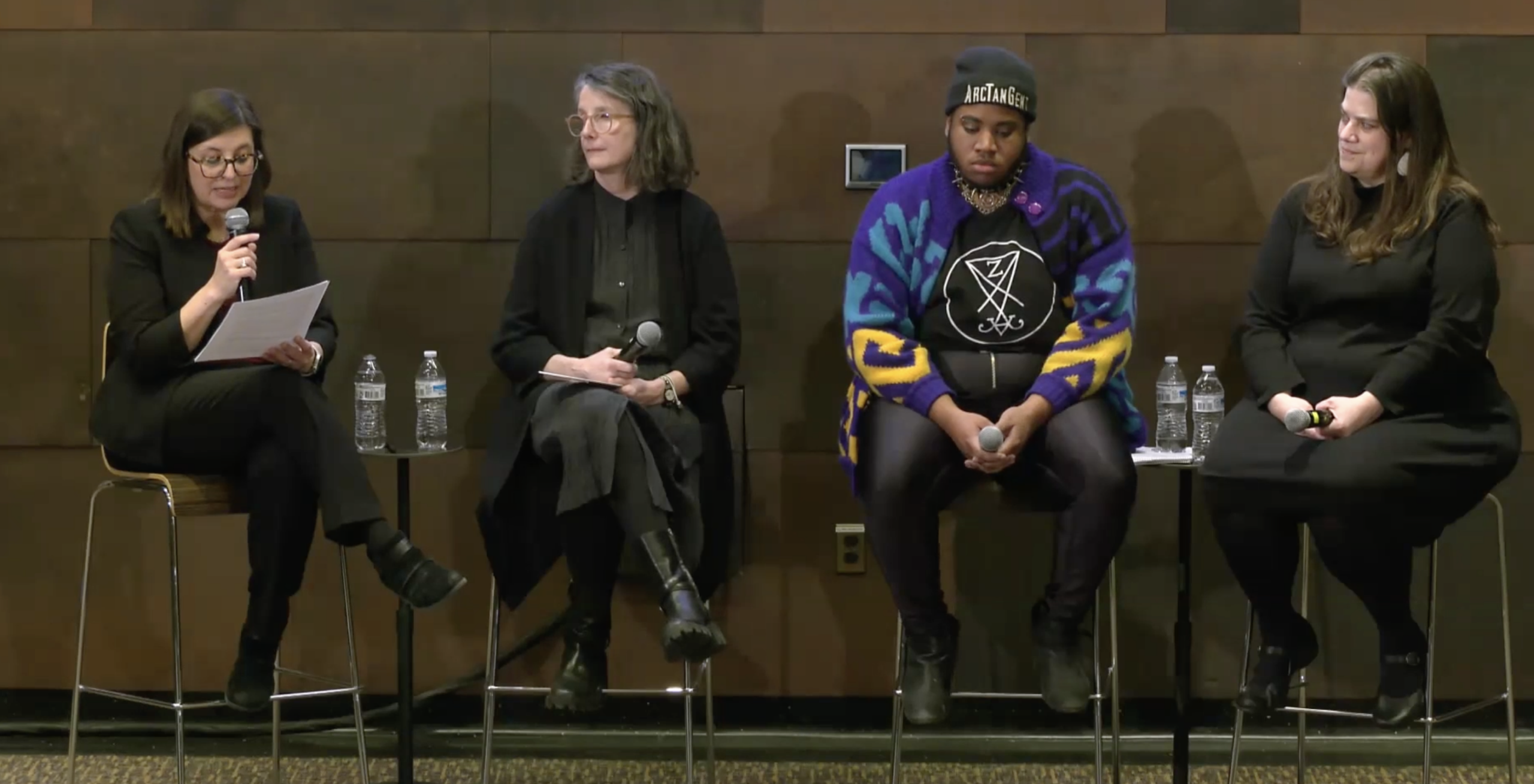
The event, “Crisis and Change: The Metamorphosis of State Violence and the Community’s Collective Response,” featured scholars from the College of Liberal Arts as well as professionals, community members and artists in three webinar panels. Each addressed a different aspect of the federal operation’s impact and focused on language around state-sanctioned violence, the shape of community action and the response of artists.
Elisia Cohen, director of the Hubbard School of Journalism and Mass Communication, said the webinars followed the significant impact made by more than 3,000 federal immigration agents who carried out operations in the Twin Cities from early December through Feb. 12, when the administration declared an end to the surge.
“Operation Metro Surge upended the daily lives of Minneapolitans, turning routine activities like grocery shopping into high-risk encounters for many members of our community here,” Cohen said.
Linguistic tactics
During the first webinar on “The Language of State Sanctioned Violence in Historical and Political Context,” panelists discussed the deaths of two Minneapolis residents, Renee Good and Alex Pretti, at the hands of those agents — and the description of both of them as “domestic terrorists.” Atilla Hallsby, assistant professor in the department of communication studies, said such labels predetermine and pre-adjudicate investigations to prevent proper scrutiny.
“In some ways, it is a theory of language and reality, where if I can just speak into existence first, then reality will follow suit,” Hallsby said, adding that labels like “illegal immigrant” or “detainee” can have a similar effect.
Fellow panelist Bruno Chaouat pointed out that numerous governments known for human rights abuses have used such linguistic tactics throughout history.
“It’s the playbook of Russia,” Chaouat said. “It’s the idea that you create a category of people, you identify them as the enemy of the nation, and then you can do whatever you want with that narrative.”
Community response
Panelists in the webinar’s second session, called “Communication, Community Resilience, and Social Justice in the Shadow of Operation Metro Surge,” looked at the challenges of collective action in an ICE-occupied Minneapolis.
Hubbard School Associate Professor Amy O’Connor, who researches corporate social responsibility, pointed out that despite the Twin Cities’ high density of company headquarters, it fell to local small businesses to support the community during the surge.
“When Metro Surge started, they [large corporations] sort of faded into the background,” O’Connor said. “It was their employees and community members who stepped forward; that gap was really noticeable.”
Samantha Majhor, assistant professor in the department of American Indian studies, noted that the widespread protest focused on the Whipple Federal building — ICE’s home base during the surge — notably stands on the Fort Snelling site built on sacred Dakota land. Majhor said ICE’s indiscriminate detainment of people in the Twin Cities resonates with local Indigenous communities, who view the surge as a modern echo of historical colonial practices.
Community activist Jae Yates said people in the Black community were frustrated when some called the surge unprecedented. Yates noted that Black communities in the Twin Cities have long had systems in place to support their neighbors and resist institutional violence. The wider community only had to look to learn those lessons, according to Yates.
“I personally don’t believe that ICE would feel the same empowerment to brutalize our communities if people had taken violence against Black communities more
seriously,” Yates said.
Artistic resistance
The final panel of the night, called “Artistic Resistance and Radical Solidarity in Minneapolis,” considered the role of art as an active instrument of resistance and healing. The panelists — Sumanth Gopinath and Patrick Warfield, faculty from the department of music, along with music student Paolo Debuque; Jenny Schmid, a professor in the department of art; and Beth Hartman, a lecturer and scholar in the department of writing studies — all agreed that the arts were integral to creating community and boosting morale during the surge.
Much of the protest art and music that has developed out of the surge refers to animals or elements specific to Minnesota and the Twin Cities, such as snow plows, loons and a distaste for “winter ice” as a play on words. The panelists agreed these inside jokes helped to build a deeper-rooted community.
“Minnesotans finally learned to talk to strangers,” Schmid said.
Schmid said art shaped her experiences during Operation Metro Surge, as it did during Black Lives Matter, through the printed posters she created for protestors to carry. Schmid said those printed pamphlets and posters would be added to the archive as part of the moment’s artistic legacy.
Warfield said it’s important to preserve and document the music during the protests, given the ephemeral nature of it. Though art can be kept in galleries or in archives, live musical moments, even when recorded on video, lose some of their power.
“We need to honor these things profoundly,” Warfield said.