Students say U Card building access policy doesn’t make them safer
New security measures have minimal impact on students; reveal further concerns about safety during Operation Metro Surge
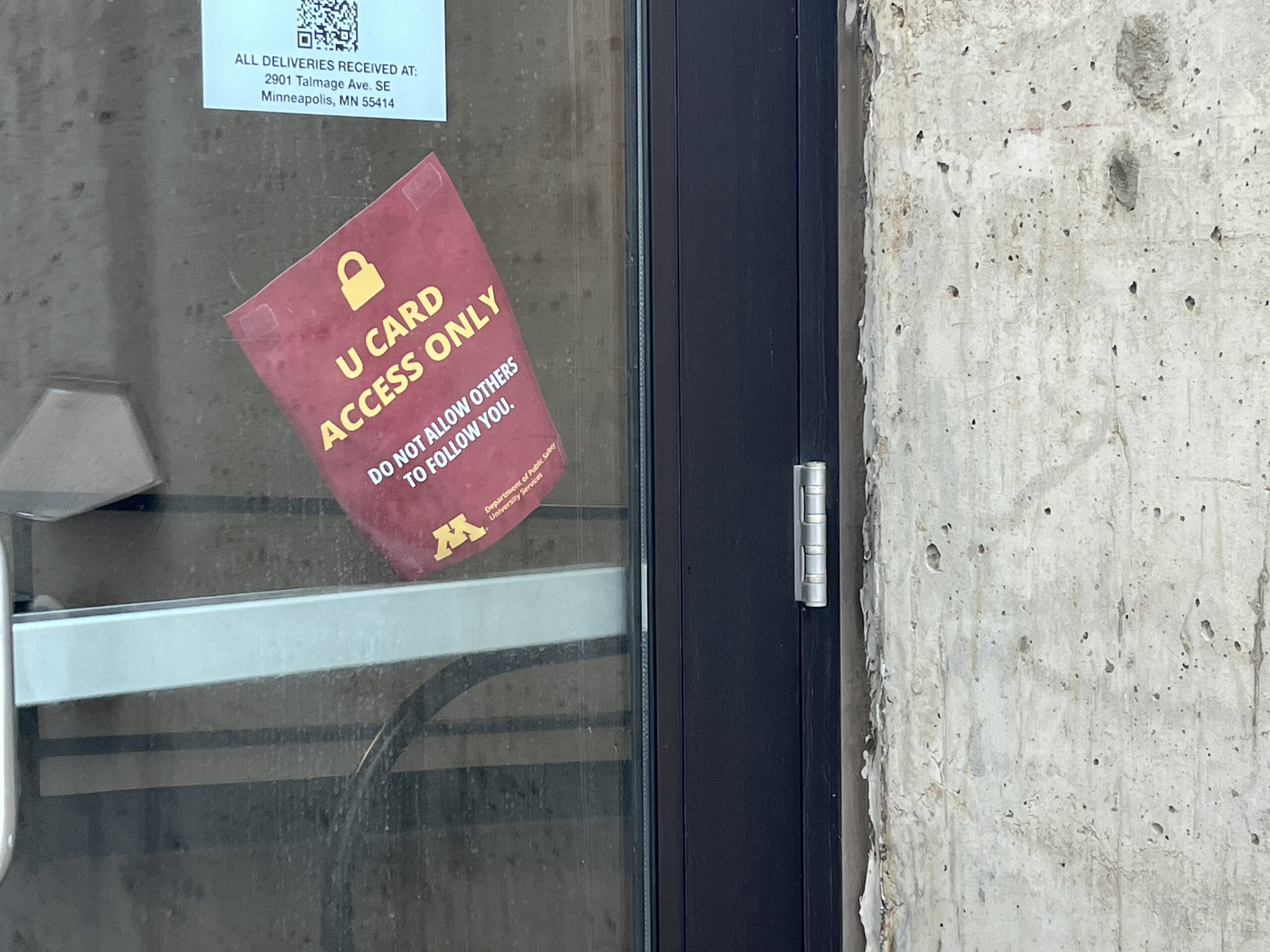
Restricted access to campus buildings — available only through U Card scans — has remained in place since Operation Metro Surge was declared over in February. Yet some students say the policy doesn’t make them feel safer.
“I see people getting let in behind me all the time,” said Ingrid Ebbesen, an art student at the university. “If [immigration agents] really wanted to get in, they could.”
The University of Minnesota’s administration announced the U Card policy at the start of the spring semester, which made the majority of campus buildings only accessible by scanning a university ID card, or U Card. The decision came as the surge was escalating and protests were growing.
“The Department of Public Safety (DPS) is focused on your safety, not immigration enforcement,” the university wrote in an email explaining the change.
At that time, Minnesota Nice was set aside. Students were instructed to scan and shut the door in the face of others behind them, leaving them in the frigid cold to scan for themselves.
First-year student Mila Kaero said the U Card policy was manageable but especially inconvenient during cold winter days, when the card needed to be fished out of bulky clothing.
But, she and others agreed, if greater security followed, it was worth it for the immigrant student population. For these students, ICE presence remains a threat. According to data from the university’s institutional data and research, over 6,000 students at the university come from immigrant backgrounds.
Koveyia McPipe, a junior in apparel design, said she wasn’t confident the shift to U Card-only access provided better security for McNeal Hall, where she takes most of her classes.
While the main door to the building is only accessible by U Card, McPipe said two of the other doors are unlocked and broken, so they cannot properly close. As a result, the doors let in cold air and make students feel unsafe, she said.
Even after federal officials said on Feb. 12 they were winding down the surge, wariness among some students persisted. Charlotte LaFond, a freshman at the university, suggested that the university have more security guards patrolling between buildings on campuses. Others wanted a more direct stance from the university against ICE, outwardly condemning their actions.
One suggestion raised by students was for the university to declare itself a sanctuary campus, meaning that no ICE activity would be permitted on campus property. Joe Linstroth, a university public relations strategist, said that the university does not condone the use of the term sanctuary campus.
To students like Ebbesen, however, the phrase promotes an understanding of the fears immigrant students are having on campus.
“To me, it seemed like there was a lack of acknowledgement that the environment has already been disrupted,” Ebbesen said. They said that taking measures such as declaring the university a sanctuary campus would make students feel safer than any U Card scanner ever could.