The art of protesting: UMN students create signs for their windows
Opposition signs appeared in the windows of student housing and apartments during Operation Metro Surge.
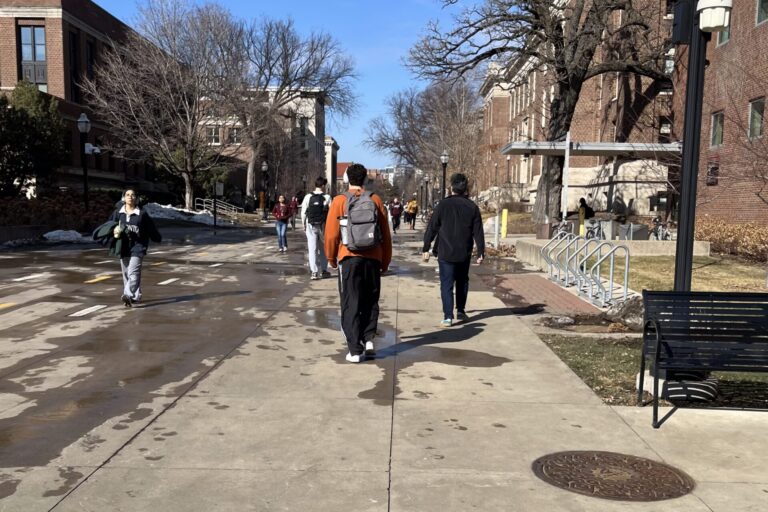
In the weeks following Operation Metro Surge’s declared end, neighborhoods around the University of Minnesota campus returned to normal. But as protests died down, signs remained, standing tall. “ICE OUT MSP,” one reads in the window of an apartment in Dinkytown. On the other side of the street, a sign in the window of a house hangs with words: “Children are not bait.”
Just outside the same house sits a poster of Smokey Bear with a political play on his original message: “Remember, only you can prevent fascism.”
Lydia Hinds, a senior studying criminology and justice through sociology of law, still hasn’t taken down those signs despite the Feb. 12 announcement that the immigration enforcement surge was ending.
Having previously interned and worked for agencies that specialize in immigration law, Hinds was primed to respond to Operation Metro Surge, which targeted immigrants for deportation and generated protests in which federal agents shot and killed two Americans.
“I felt it was important that everyone in our neighborhood either who is being affected by this or maybe is on the other side of things, whether they’re backing ICE or they think that that’s OK, I wanted everyone to know that this house doesn’t think that’s OK and there are people here that are willing to help,” Hinds said.
The recent anti-ICE protests have used a wide range of Minnesota imagery, leaving memorable imprints online of loons with laser eyes and cartoon-like ice cubes melting.
Many students took part in protests as the popularity and publicity of resistance grew. Some started participating with friends, adding numbers to the crowds while also taking part with loved ones. Art became a medium, and students, regardless of major or neighborhood, took advantage of that.
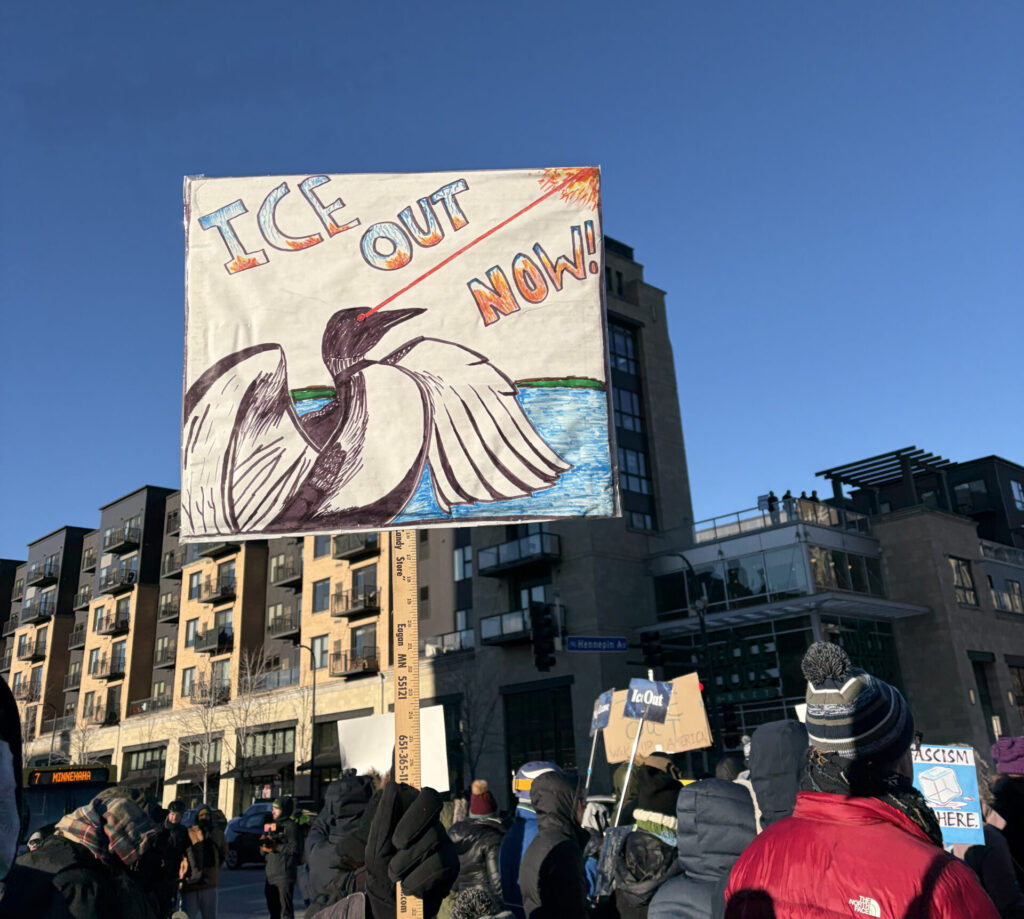
Elizabeth Gust, a junior majoring in English and political science, joined the protest art movement by painting signs and custom-making buttons. A couple of these pins have the melting word “ICE” with a slash through it, while others are of the state’s iconic loons.


“Having physical media that you carry around that says what you’re trying to say is just such a powerful thing, because it’s just so much more versatile,” Gust said. “That’s like the most iconic part of protests.”
Like Hinds, Gust doesn’t regularly make art, but she said sitting down and putting intention into her protest art motivated her.
“People are so quick to think of really good responses through their art, even in a kind of silly way,” Gust said. “It’s been really important showing that we are so proud to be Minnesotan; we’re proud to be here; we’re proud to be in Minneapolis, and so that’s very clear in everyone’s art.”
Mary Patten, a professor emeritus at the School of the Art Institute of Chicago, who teaches media history and participates in art, protests and collaboration within her own community, observing the ICE presence in Minnesota from Illinois. She said the humor and collective responses were an effective weapon.
“I know there’s deep community being built to protect people and to gauge risk,” Patten said. “And sometimes, making a sign and showing it is actually taking a kind of risk.”
Patten said protest history is being forgotten and noticed that much of what teenagers and young adults are doing now to protest against ICE is inspired by previous generations.
Gust said she first started protesting during the No Kings and pro-Palestine movements. However, much of her inspiration for her art comes from art posted on social media and even signs made during the Civil Rights Movement.
“A lot of the slogans I’ve used for posters have been from the Civil Rights Movement,” Gust said. “Largely because the sayings they used then are super relevant now, with government leaders perpetuating racism and xenophobia.”
Even after ICE announced its retreat, many students have kept up their signs. As Hinds and Gust said, the fight isn’t over when ICE moves on to the next city.
“We are definitely upset,” Gust said. “We are not going away, and we’re not giving up.”